
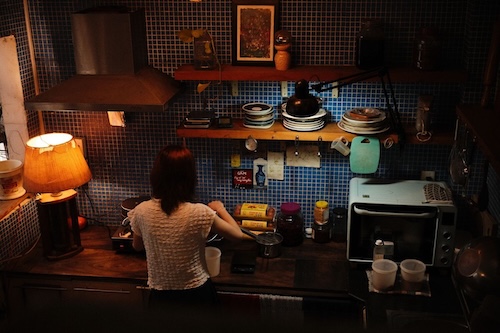
Fishya Setiana’s Orange Chicken / Multiverse, published in the Summer 2026 Issue, explores and nurtures the complexity of mother-daughter relationships. Using a contrapuntal structure, Setiana reflects on the notion of the ‘multiverse’, a multiverse which holds different possibilities for the poem’s subject, the mother, or ‘Ma’, all recounted from the perspective of the daughter. At… Continue reading Mothers, Daughters and the Multiverse: Self-sacrificing Motherhood in Fishya Setiana’s Poem Orange Chicken/Multiverse
Tag: Spellbinder Magazine
What We’re Reading: A Creative Nonfiction Summer Reading List

As a reader who needs to be ‘in the mood’ for a book before I can read it, I struggle to assign myself a reading list which I will actually stick to. I tend to pick up whatever book matches the particular flavour of adventure, nostalgia, or heartache I’m craving, and spend days consuming it… Continue reading What We’re Reading: A Creative Nonfiction Summer Reading List
How to Lose a Guy in 10 Days
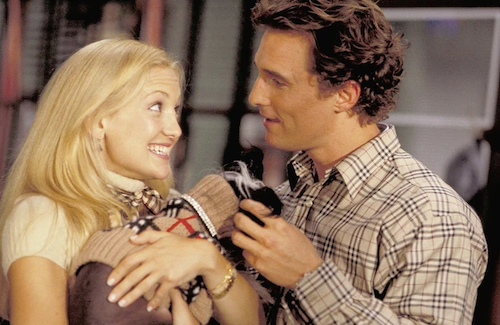
A Guide for Nonfiction Writers There are two moments in every writer’s dating life that inspire equal amounts of fear. The first is realising you fancy someone. The second is them realising you write nonfiction. From that point on, every conversation carries a faint air of legal negotiation. Anecdotes are shared with caution, offhand remarks… Continue reading How to Lose a Guy in 10 Days
The Wolf in Sheep’s Clothing: Weaponised Domesticity in Bryanna Licciardi’s The Polisher
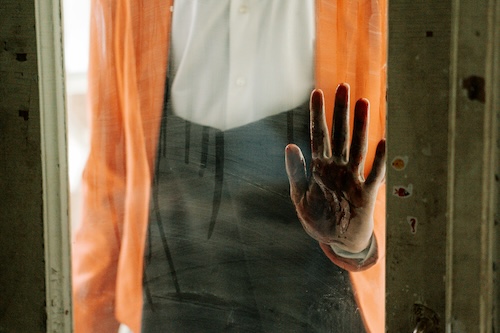
Popular murderess icons are a dime a dozen, and one such icon exemplified in Bryanna Licciardi’s The Polisher is ‘The Monstrous Homemaker,’ where weaponised domesticity transforms a comely figure of nurture into something lethal. Characters such as Pearl in Pearl are trademarked to rupture their simple, sweet shell of femininity and docility, like a boiling… Continue reading The Wolf in Sheep’s Clothing: Weaponised Domesticity in Bryanna Licciardi’s The Polisher
What We’re Reading: A Witness to Violence in Marvel Moreno’s December Breeze

Amidst the humidity of a Cartagena night, I lay awake beneath the lethargic chug of an overworked air conditioner, excited to visit my family’s home city for the first time. I tried to imagine the families that had once lived in that colonial-style home in Centro Historico, now carefully preserved as an Airbnb; perhaps the… Continue reading What We’re Reading: A Witness to Violence in Marvel Moreno’s December Breeze
The Crease Effect: Intimacy in Action Lines

In the midst of the third millennium’s chaos and apocalyptic predictions, the waitress serves my cappuccino and calls me ‘honey’. The café is small, peculiarly quaint: five tables and a slightly askew picture of the New York City skyline. The doorbell jingles and in walks the waitress’s partner, daffodils in hand and the certainty of… Continue reading The Crease Effect: Intimacy in Action Lines
The Cost of Being Creative: Fighting Class Exclusion in the Arts
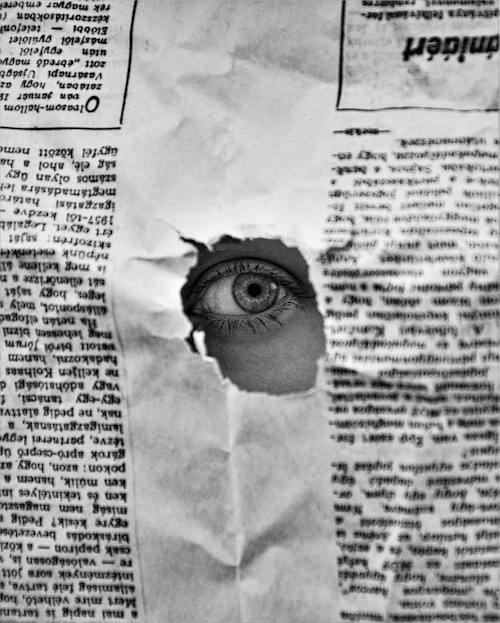
The arts have a favourite myth: that creativity drifts as freely as a neighbour’s cannabis smoke, provided one endures a little aestheticised discomfort. It takes place in a charmingly decaying flat somewhere near the Thames, shared by five people, filled with second-hand furniture, mismatched mugs and at least one tote bag from a gallery opening.… Continue reading The Cost of Being Creative: Fighting Class Exclusion in the Arts
Our Enemy, Ourselves: Anxiety Personified in Elizabeth Ingamells’ My Friend, the Hag

I admire my friend’s consistency and unwavering attention to my every unwanted feeling, nervous twitch, or anxiety riddled thought. While I’m huddled against my pillow, petrified of an open curtain, she is just outside my door, whispering. Featured in the Winter 2026 issue of Spellbinder Magazine, Elizabeth Ingamells’ My Friend, the Hag uses an evocative… Continue reading Our Enemy, Ourselves: Anxiety Personified in Elizabeth Ingamells’ My Friend, the Hag
Writing the Mind in Motion: Tips and Resources for Stream of Consciousness

Stream of consciousness is often described as the most intimate of literary techniques. It tries to capture the mind as it actually functions: layered, looping, distracted, luminous, contradictory. For writers it can feel liberating and disorienting at once. How do you capture the quicksilver movement of thought without losing the reader? How do you preserve… Continue reading Writing the Mind in Motion: Tips and Resources for Stream of Consciousness
Autumn 2025 – Drama

OTTO And we carry around your little bags. Always carrying around bags of things you don’t need. Bundles of yarn. Sweaters for kittens we don’t have. An old Bible you know nothing about. Bottles of paint and brushes. Crumpled receipts that are two years old. What do you need all that shit for? I once… Continue reading Autumn 2025 – Drama